Remnants: A Conversation on Attention, Trace, and the Overlooked
Made from a distance, without invoking or manipulating the subject. As a chameleon photographer, I love to blend into the shadows as I capture and approach what I see with dignity and respect. I want my photographs to observe as much as they document, the unfolding, the story — telling itself.
This is a brief interview on how Remnants (2017-ongoing) came to be.
Q: What is Remnants?
A: Remnants is an ongoing photographic series I began in 2017. It asks a single question: what do spaces hold after people leave?
I make the work in the streets, alleyways, back lots, and parking lots of the cities I move through and bear witness to. The subjects are unremarkable — stacked chairs against a tiled wall, a payphone on a corner no one calls from anymore, shopping carts that have gathered themselves beneath a bougainvillea, a trash can refracting a private rainbow.
None of it is staged. I arrive, I wait, and I offer back what is already there. The work is not a salvage operation. It is an attention practice. The dignity is not added; it was always there.
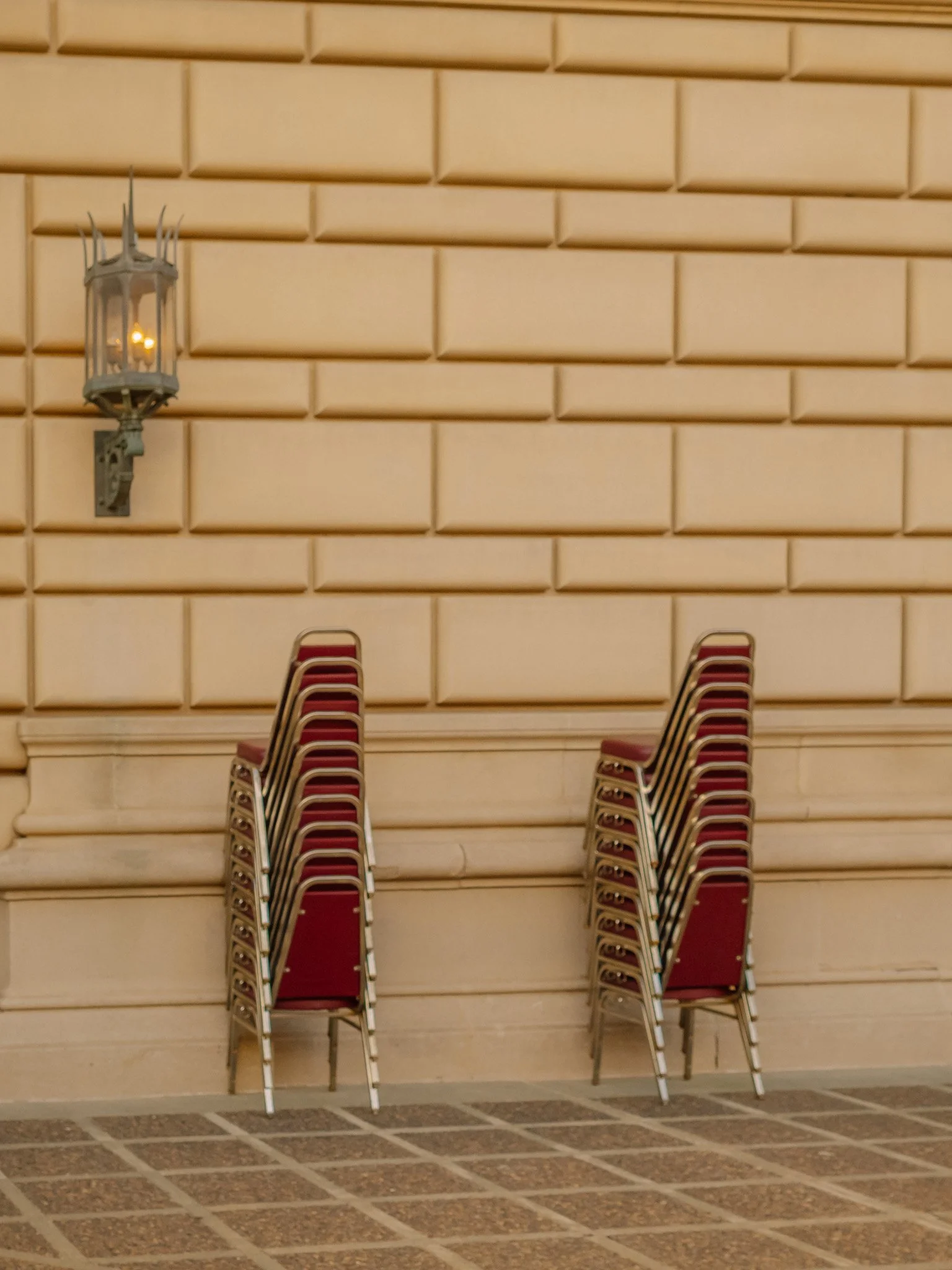
Audience, 2022. Two rows of stacked chairs pressed against a tiled wall.
Q: You often describe 2017 as a turning point. What changed?
A: For years before that, I photographed the way I thought I was supposed to — chasing the picturesque, waiting for a frame that would announce itself. And then something shifted in how I looked.
I began to notice the spaces I had always walked past. The alley behind the restaurant where workers took their breaks. The parking lot where shopping carts had come to rest against a wall. The doorway I passed every morning without ever really seeing it.
I don't think I chose to see differently. I think the seeing chose me. Once it had, I could not go back.
Remnants is the record of that shift. Every image in it is a moment I would have missed before 2017.
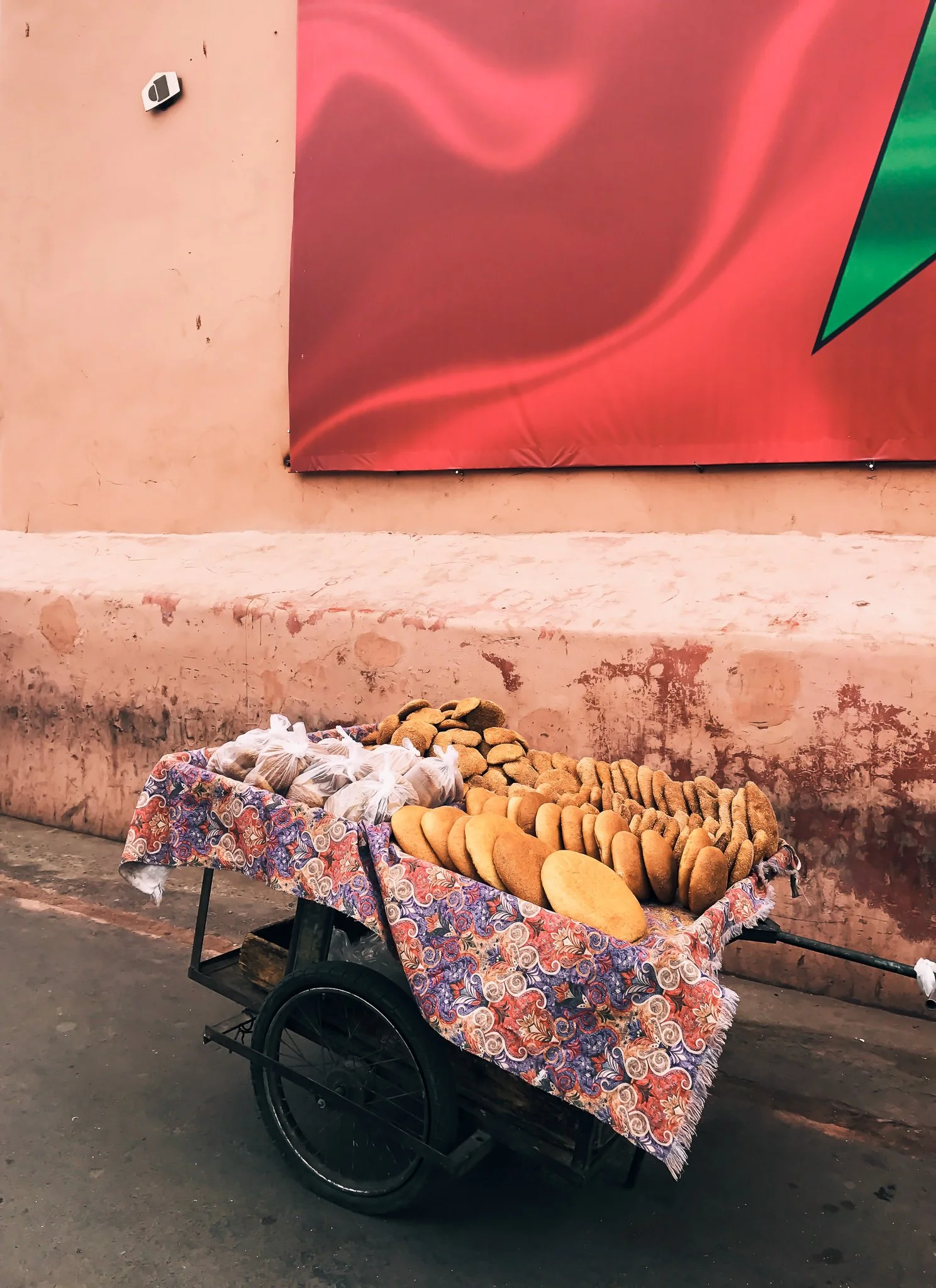
Daily Bread, 2017. A cart filled with fresh bread for the day.
Q: Why these particular spaces?
A: Because they are honest.
The cities we live in are built on their unglamorous margins — the back lots, the service alleys, the parking lots — but we are asked to look only at their surfaces. The spaces I photograph are the ones a city exists in but never presents. They hold the daily motions of countless lives without ever being asked to perform.
There is a kind of freedom in that. These places do not want anything from me. They are already themselves. I am only there to receive them.
Q: What does it mean to work without staging or manipulation?
A: It means the composition arrives before I do.
I move slowly through these spaces. I look. I wait. When something asks to be photographed, I photograph it — not the version I want it to be, but the version that is already there. I never move objects into the frame. I never remove what is inconvenient. If the light is not right, I return another day.
This is a discipline, not a rule. The rule would be about purity. The discipline is about trust — trust that the world is already saying something, and that my job is to listen closely enough to hear it.
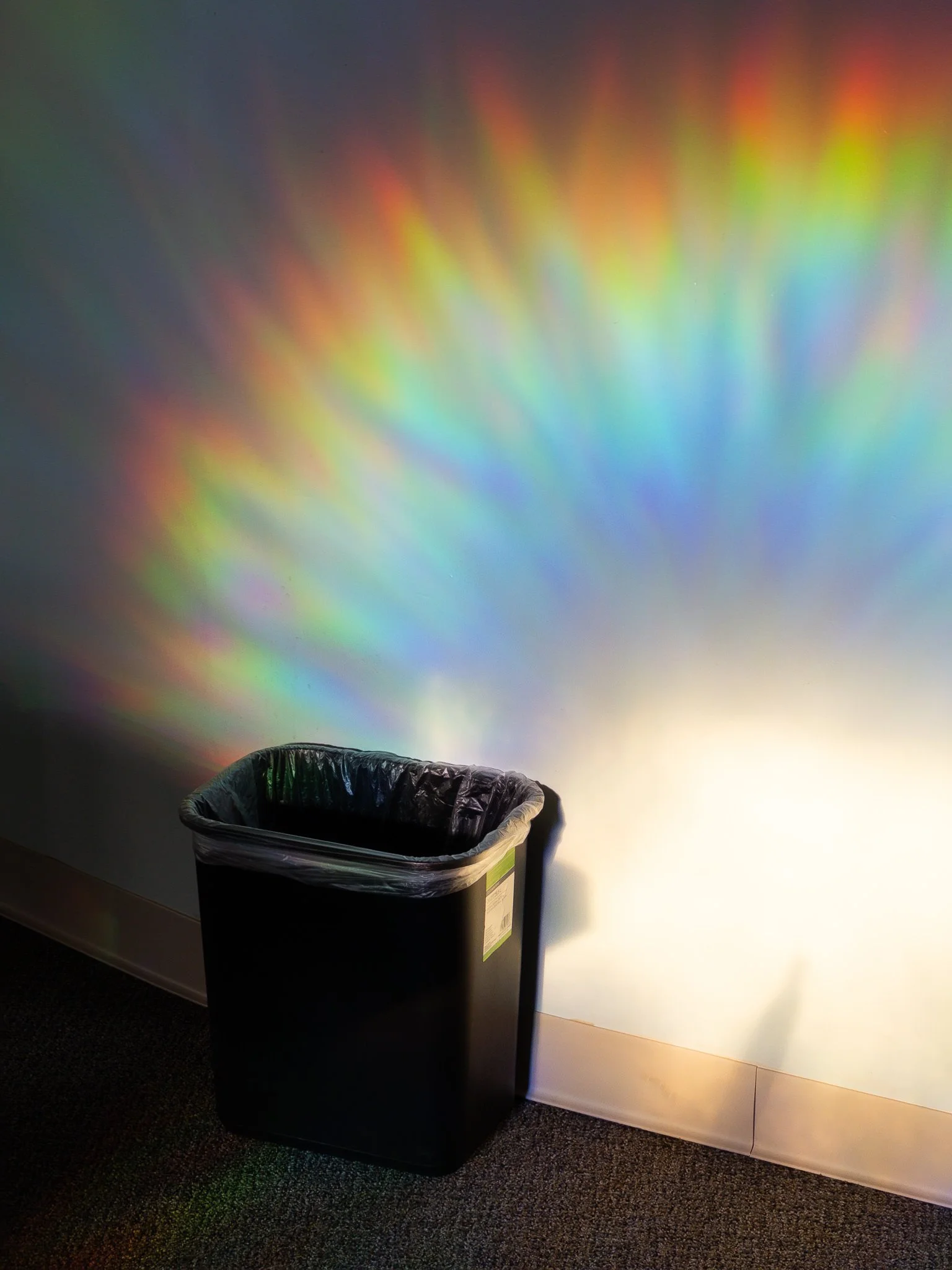
Rainbow Bin, 2025. Somehow, an office trash bin suddenly becomes brilliant by happenstance.
Q: The work is very quiet, very slow. Is that intentional?
A: Yes. Slowness is the practice.
We are surrounded by images now — billions of them, most made and shared within seconds. Photography as it exists in our daily lives has become a language of speed. Remnants moves in the opposite direction. I make each image slowly, receive it slowly, and I hope it is looked at slowly in return.
Attention is a form of care. When you look at something long enough to see it, you have already given it a kind of dignity. That is what the work is for.
Q: What lineage do you place this work in?
A: Two traditions I hold as equals.
On one side, the American vernacular tradition of Walker Evans, Stephen Shore, and William Eggleston — photographers who taught us that the overlooked corner of a country can hold as much meaning as its monuments.
On the other, a contemporary Asian way of seeing carried forward by Rinko Kawauchi, Fan Ho, and An-My Lê. Kawauchi finds the ordinary rendered luminous. Fan Ho holds the passing moment still. An-My Lê asks the landscape what it remembers. Each of them, in their own register, has shown me how attention itself can become a form of art.
I place Remnants between these two lineages. The equal weighting is deliberate. I am a Chinese American artist, and both traditions belong to me.
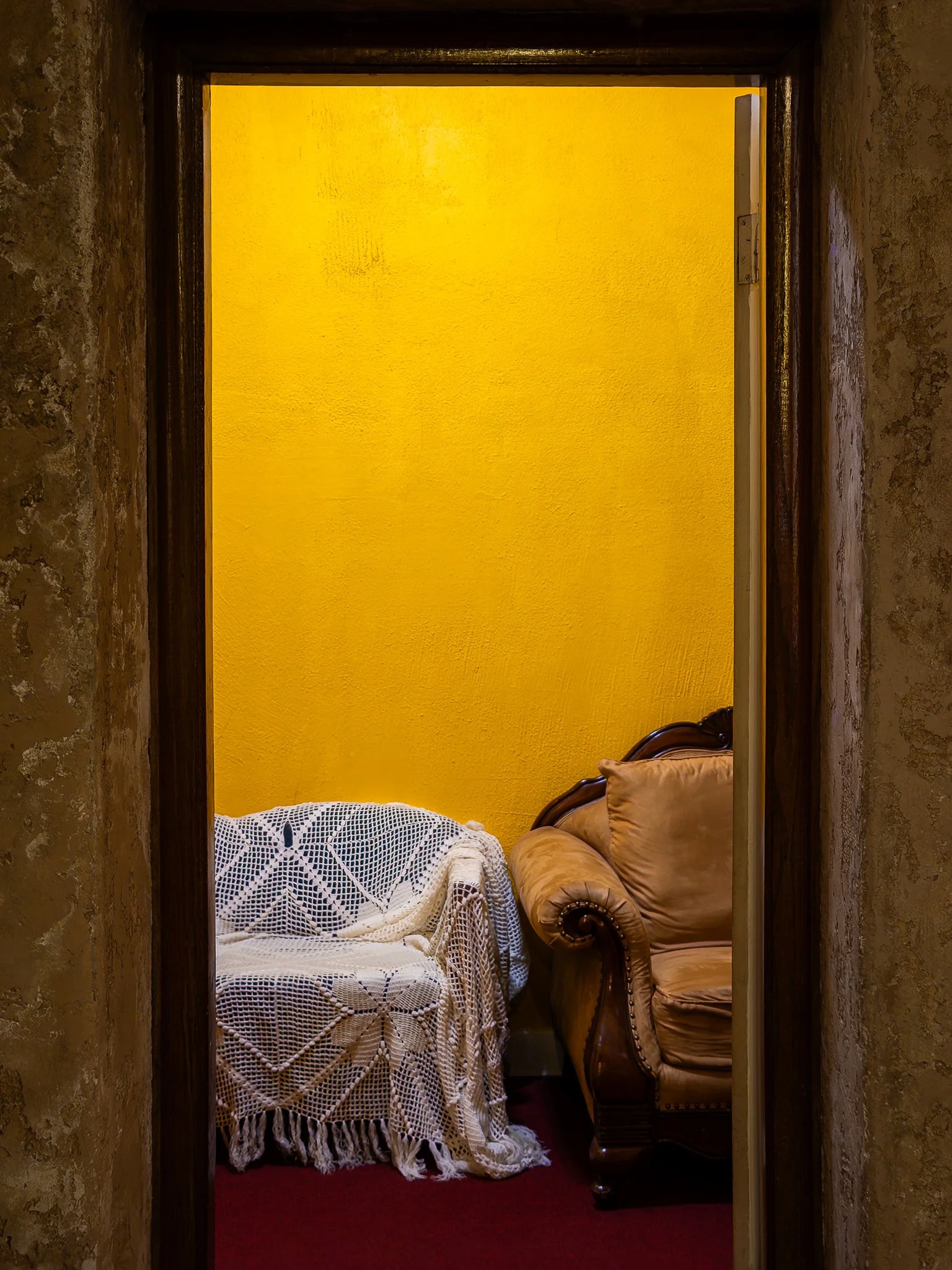
Marriage, 2025. Hidden behind an empty storage room at an old church.
Q: You don't name the cities in your titles or your statement. Why?
A: Because the work is not about place. It is about attention.
If I named the city, the viewer would see a photograph of a particular place. They would locate it, catalog it, and move on. Withholding the name asks the viewer to stay with the image itself — the light, the color, the trace — rather than to file it away as belonging to somewhere else.
There is a universality in the confinement of the photographs. The stacked chairs behind a theatre could be anywhere. The trash can catching the rainbow could be anywhere. What matters is that someone stopped, and looked, and saw.
The cities I move through are real. They live in my biography, and they will live someday in a book. But not in the images. The images belong to something older than geography.
Q: What do you hope viewers experience?
A: I hope they slow down.
I hope they notice something in one of the photographs that they would have missed in their own life — and I hope they take that noticing with them, back into the world. The spaces they walk past every day are also full of light, of trace, of quiet residue. If someone leaves one of these images seeing their own street a little more clearly, the work has done what it is meant to do.